
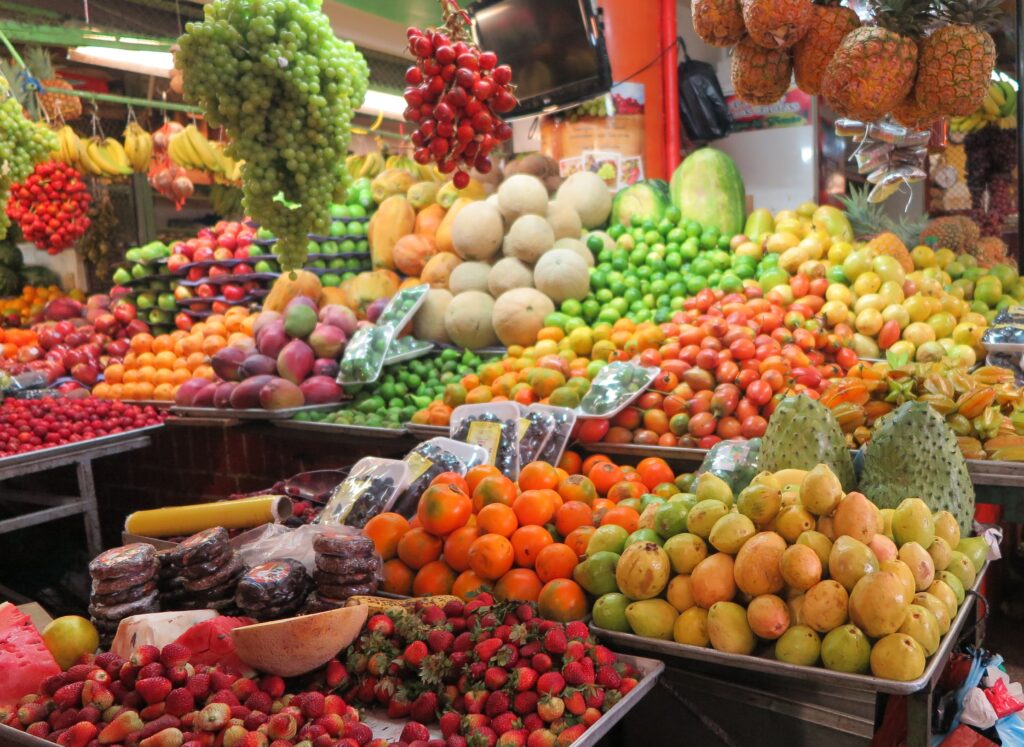
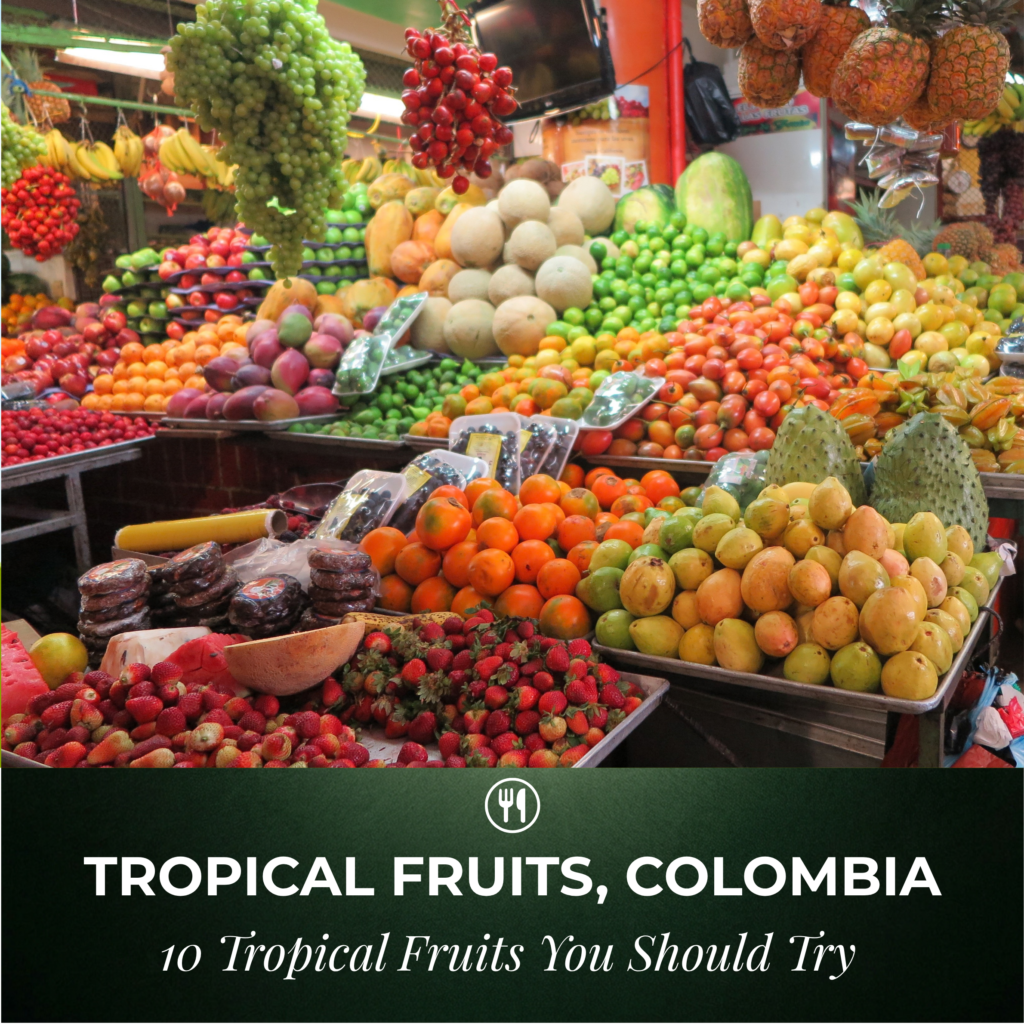
Thanks to its tropical climate and fertile soil, Colombia tropical fruits offer an exceptionally rich variety. As you travel through the country, whether stepping into local markets, grocery stores, or restaurants, you will encounter vibrant, colorful fruits that you’ve likely never seen before.
Colombia Tropical Fruits
No matter what else you eat on your trip, don’t miss out on enjoying plenty of fresh produce. If you have a passion for exotic flavors, exploring Colombia tropical fruits will truly amaze you with its sheer diversity.
Drawing from my own travels, I’ve handpicked 10 unique options that you absolutely must try.
1. Carambola (Starfruit)
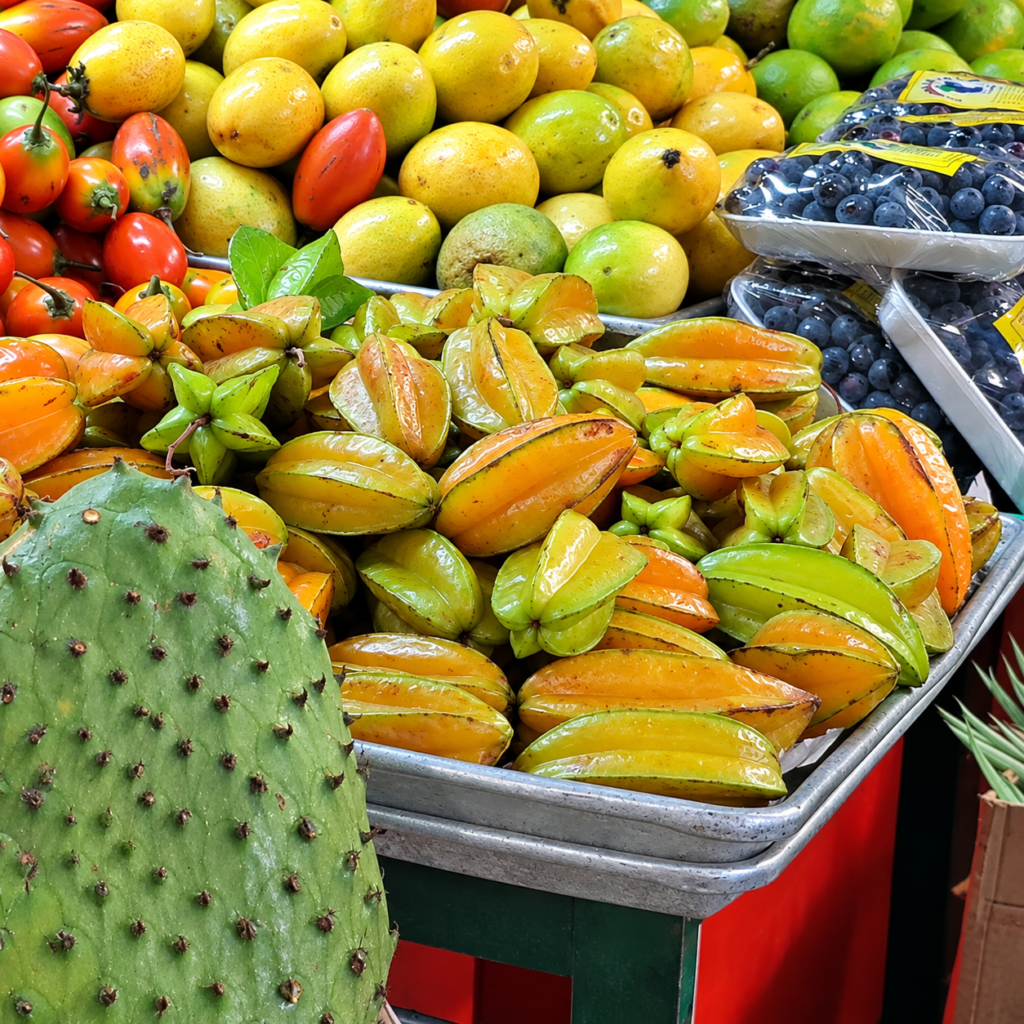
If you love sour flavors, carambola offers a truly unique experience among Colombia tropical fruits. Catching your eye with its distinctive star-shaped cross section, this fruit can be quite tart.
To be honest, I couldn’t finish an entire one because of its intense sharpness! But if you enjoy tangy, sour notes, I definitely recommend giving it a try at least once while traveling through Colombia.
2. Granadilla
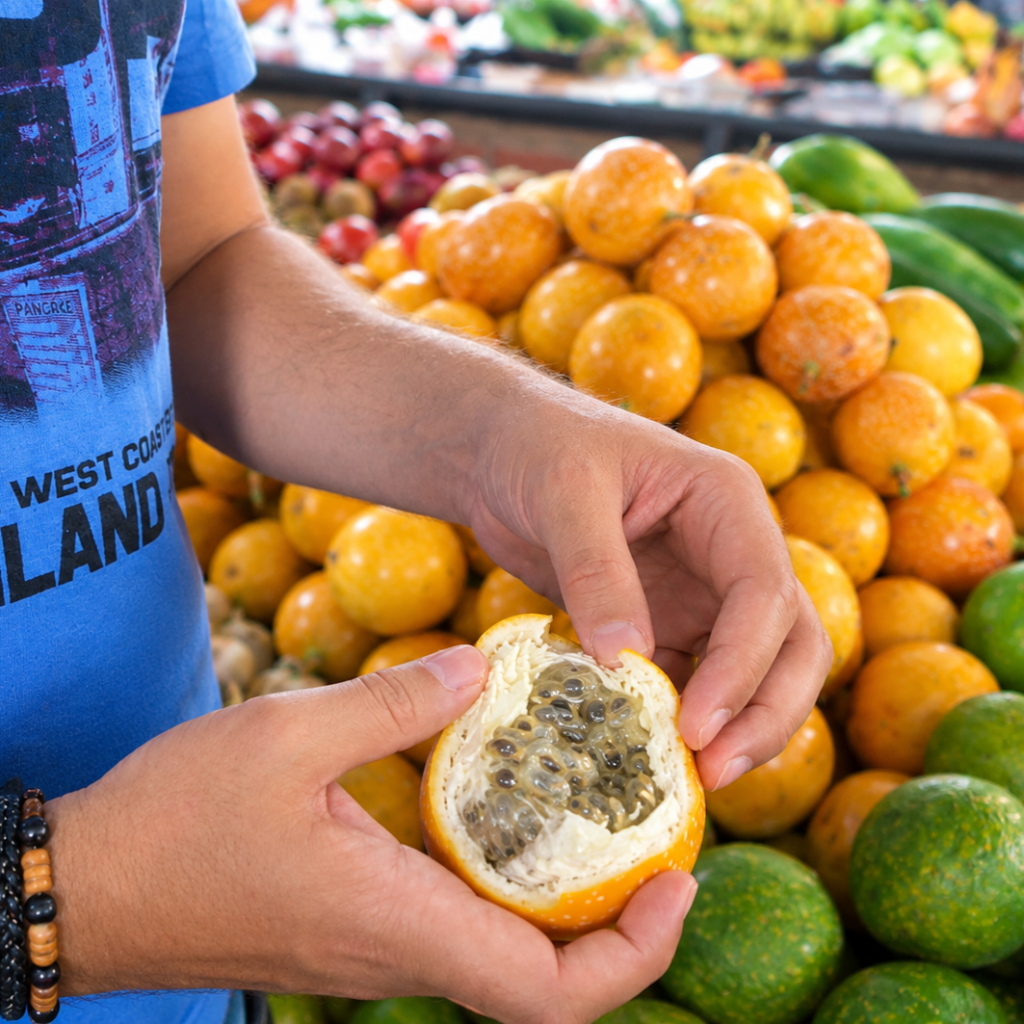
Granadilla is easily one of the most interesting fruits you’ll come across in local markets. It stands apart from other Colombian tropical fruits both in its appearance and the way you eat it.
You start by tapping its hard, yellow outer shell against a solid surface to crack it open. Once peeled, tear through the thick inner membrane and swallow the gelatinous, seeded pulp directly.
Sweet and aromatic, granadilla is widely available across the country. While it might look a bit unusual at first glance, its flavor is very easy to fall in love with.
3. Guama
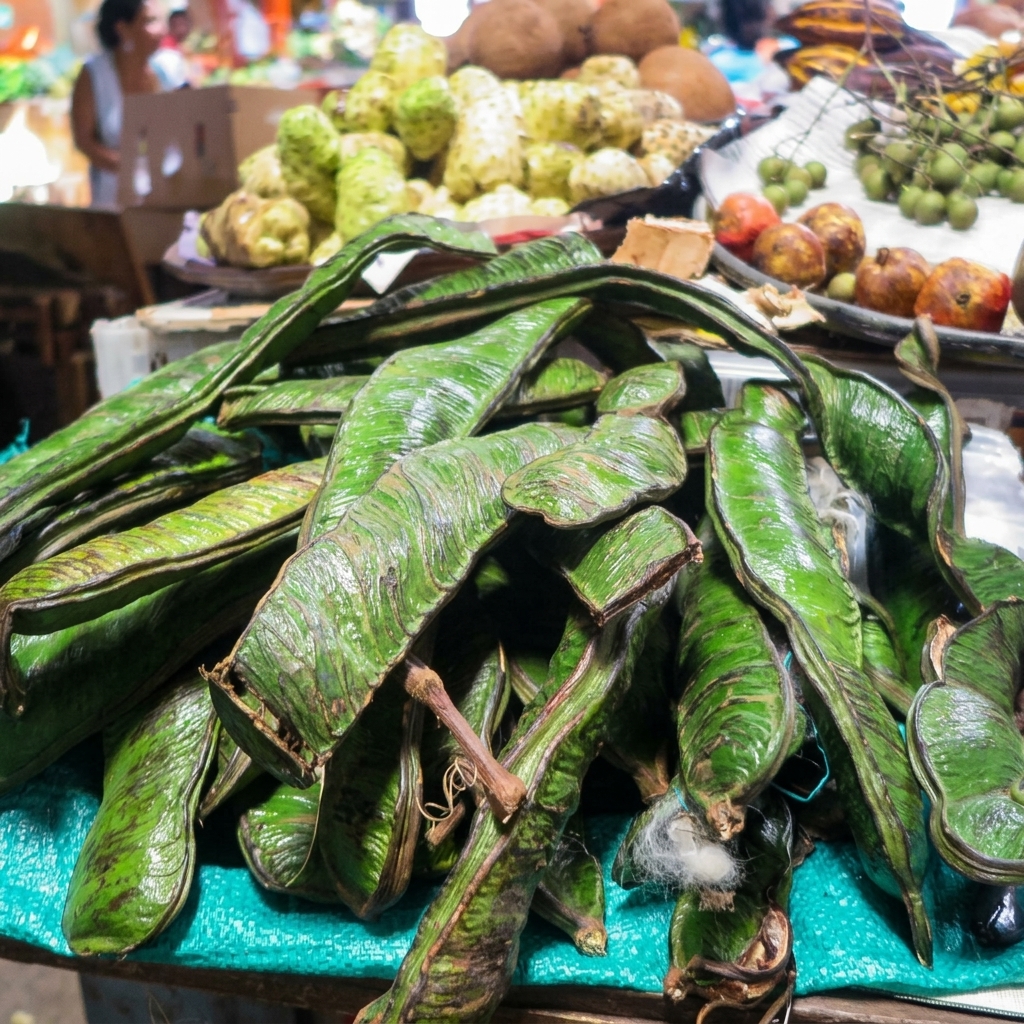
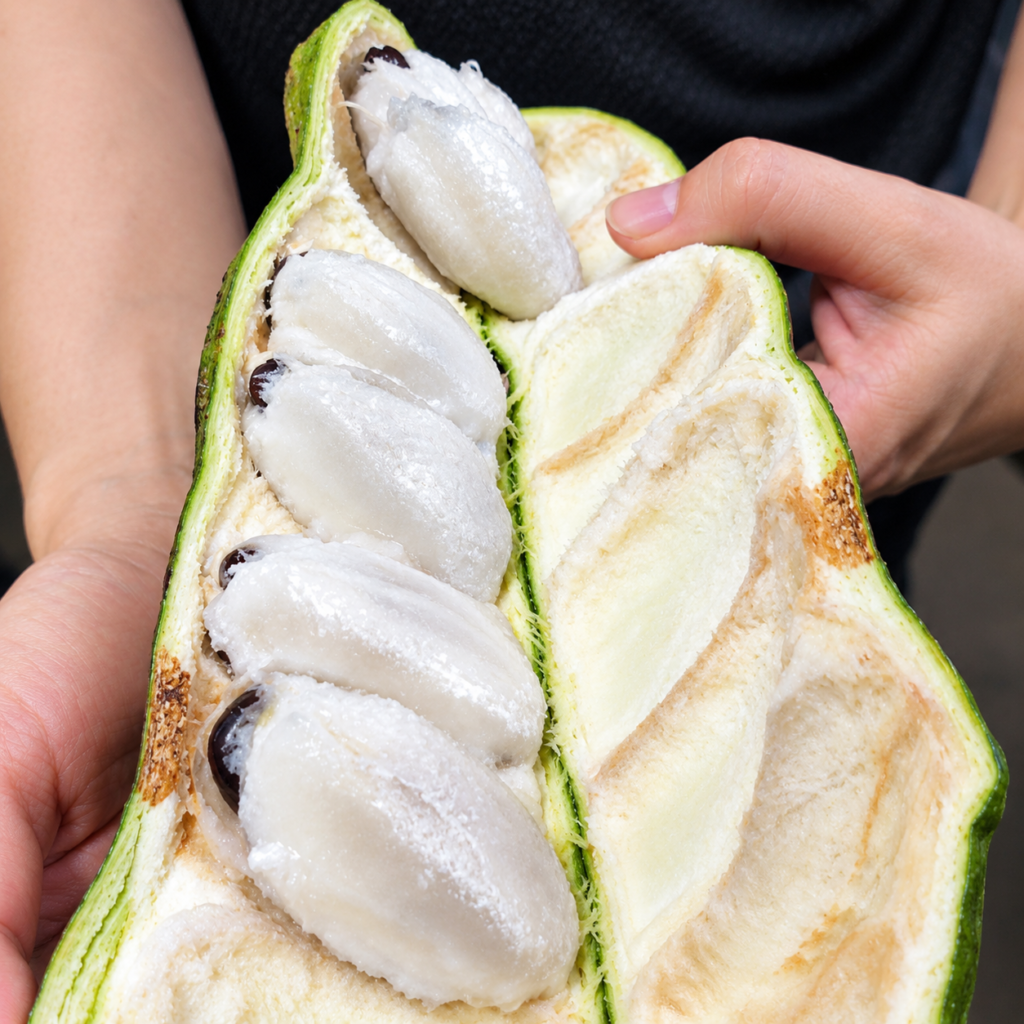
Guama is the kind of fruit you might not even recognize as a fruit at first sight.
Its outer pod personally reminded me of an oversized green runner bean. When you snap the pod open, you reveal soft, snow-white fruity segments inside.
Each white segment surrounds a large inner seed. The flesh is delightfully sweet, making Guama a fascinating treat if you enjoy exploring exotic Colombia tropical fruits.
4. Guanábana (Soursop)
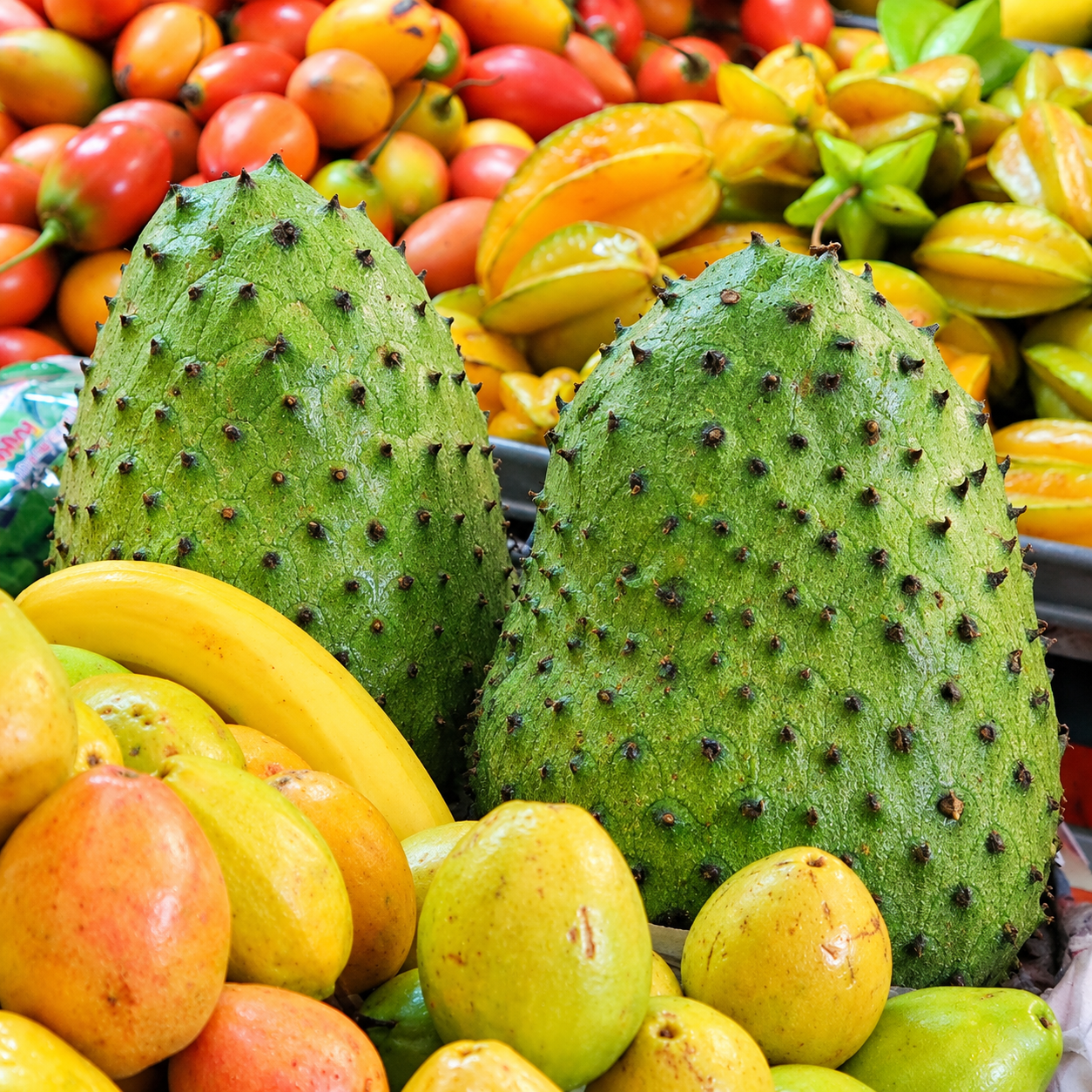
With its vibrant green skin, thick texture, and spiky exterior, guanábana was one of the most eye-catching choices I saw in Colombia.
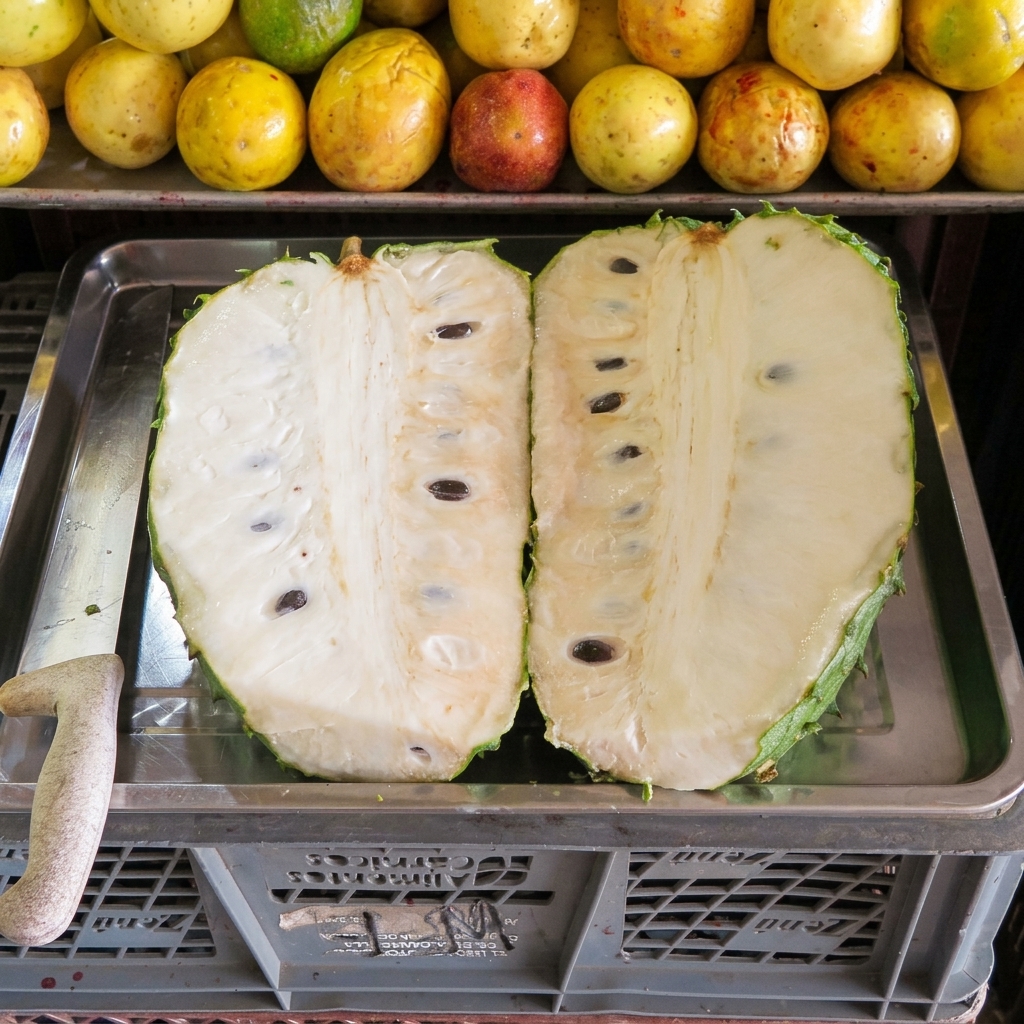
Despite its bold and intimidating look, the interior of this large tropical fruit is surprisingly tender, creamy, and sweet. It easily became one of my personal favorites when discovering local Colombia tropical fruits.
Since whole guanábanas can be quite large and a bit pricey, many places offer them pre-sliced into smaller portions. If you spot one, make sure to give it a try.
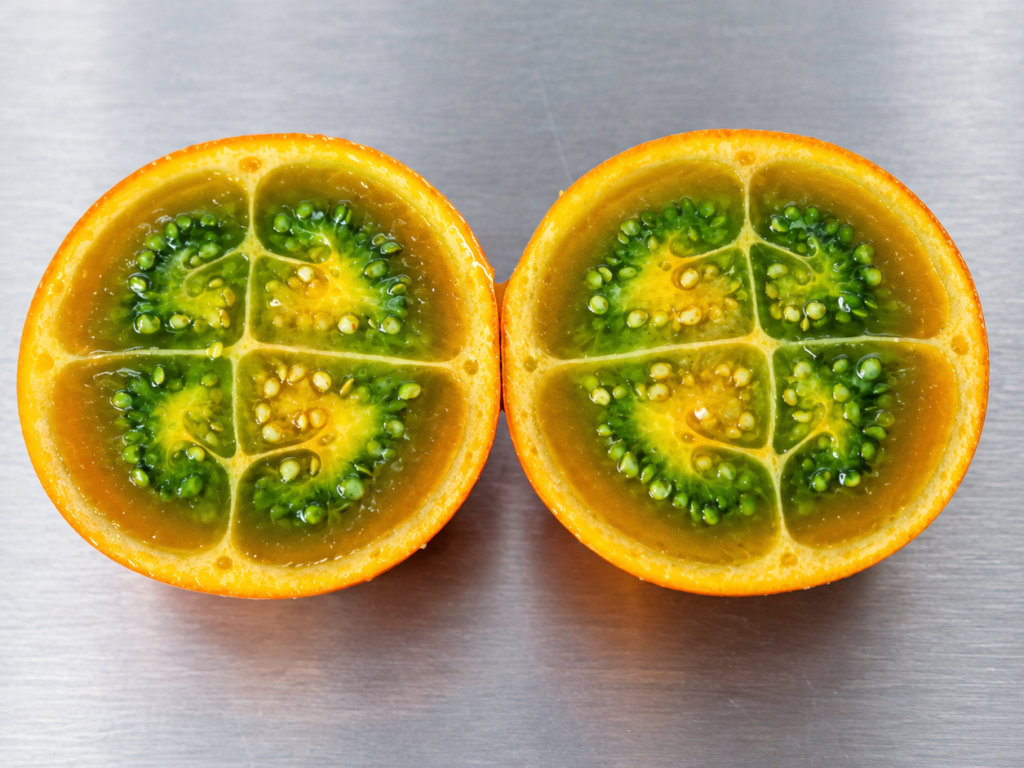
5. Lulo (Naranjilla)
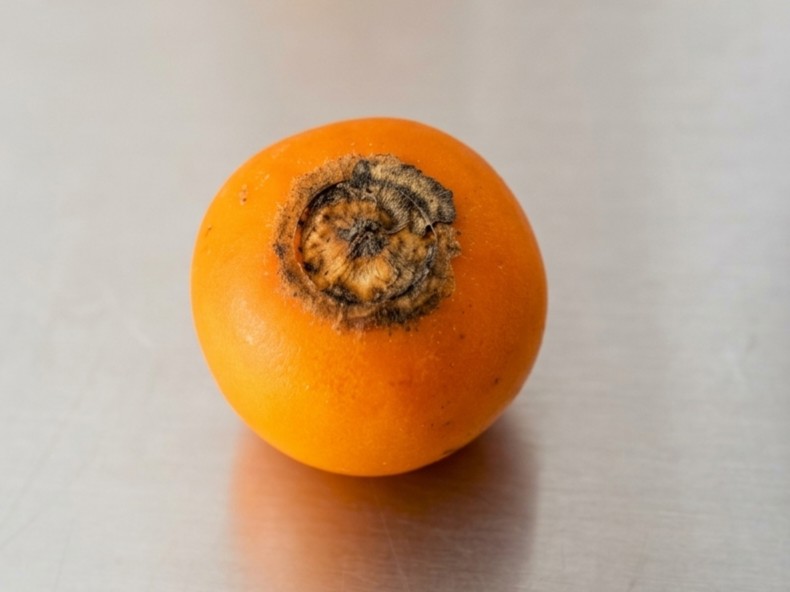
If you appreciate tart and refreshing zesty flavors, lulo is made for you. It features a juicy interior that you can simply slice in half and scoop out with a spoon.
In Colombia, however, lulo is most commonly enjoyed as a juice (jugo de lulo). You’ll find it prominently featured on the drink menus of almost every local restaurant and juice bar.
While it tilts toward the sour side, a cold lulo juice is an indispensable part of sampling Colombia tropical fruits on a warm day.
6. Mangosteen
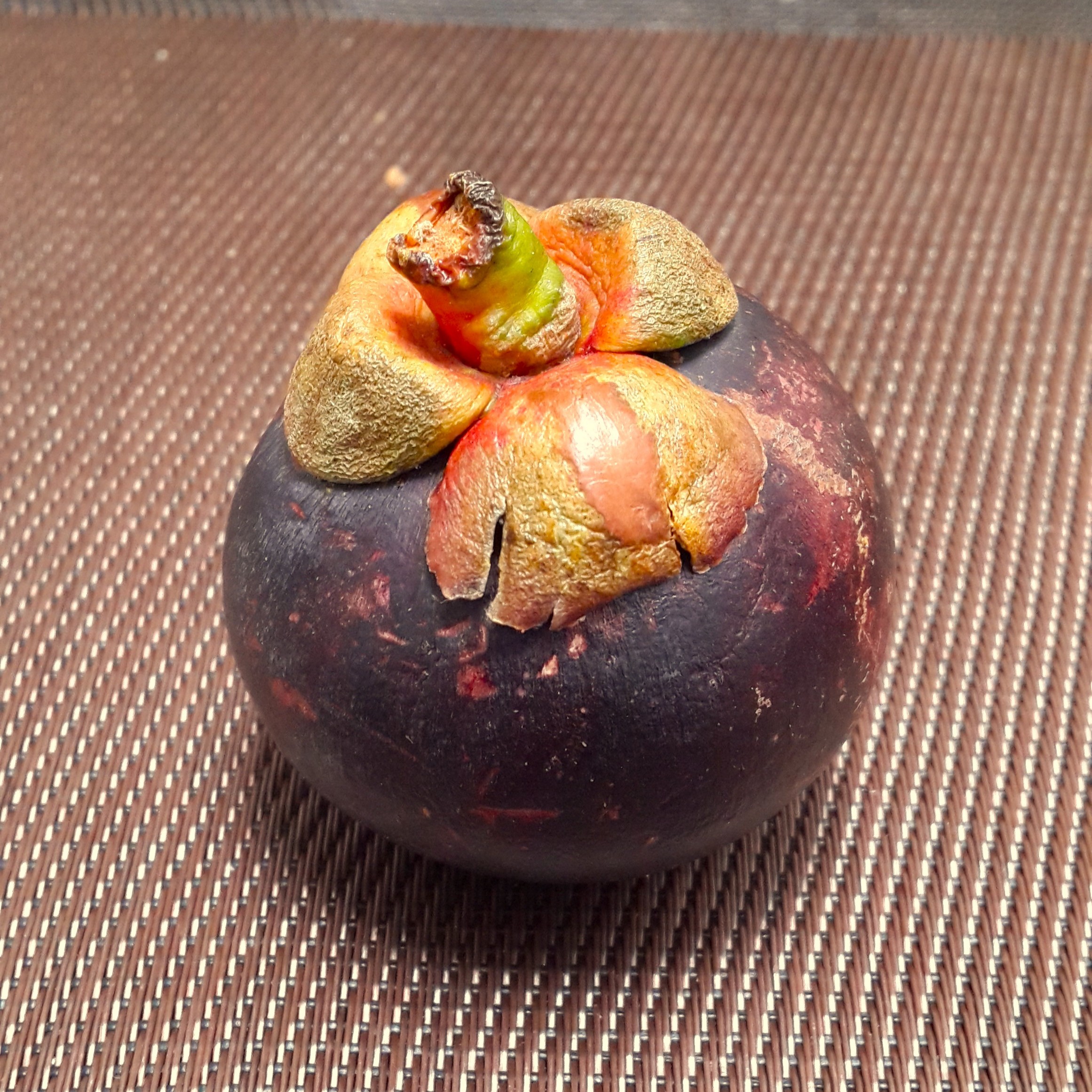
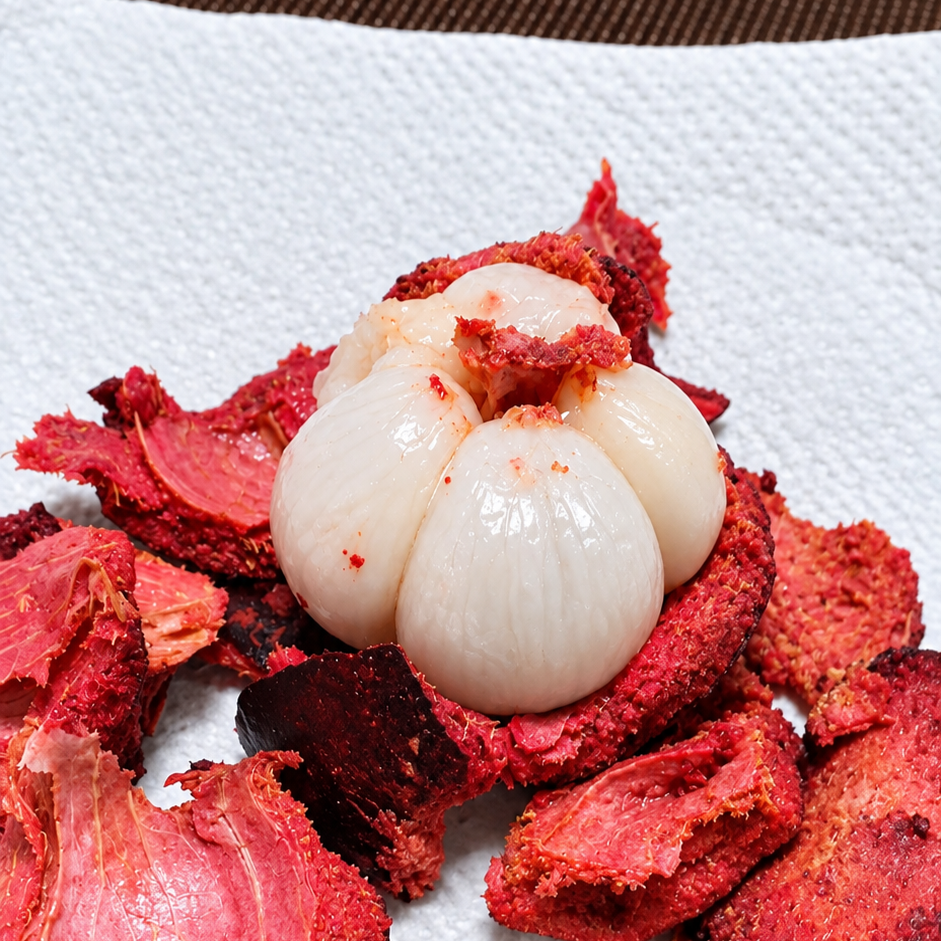
At first glance, mangosteen looks quite peculiar and might catch you off guard. Breaking through its thick, dark purple rind reveals soft white segments that closely resemble cloves of garlic.
Because of its unique presentation, you might hesitate for a moment before taking your first bite. However, one taste is usually all it takes to change your mind. If your goal is to discover truly remarkable Colombia tropical fruits, mangosteen absolutely belongs on your bucket list.
7. Pitaya (Yellow Dragon Fruit)
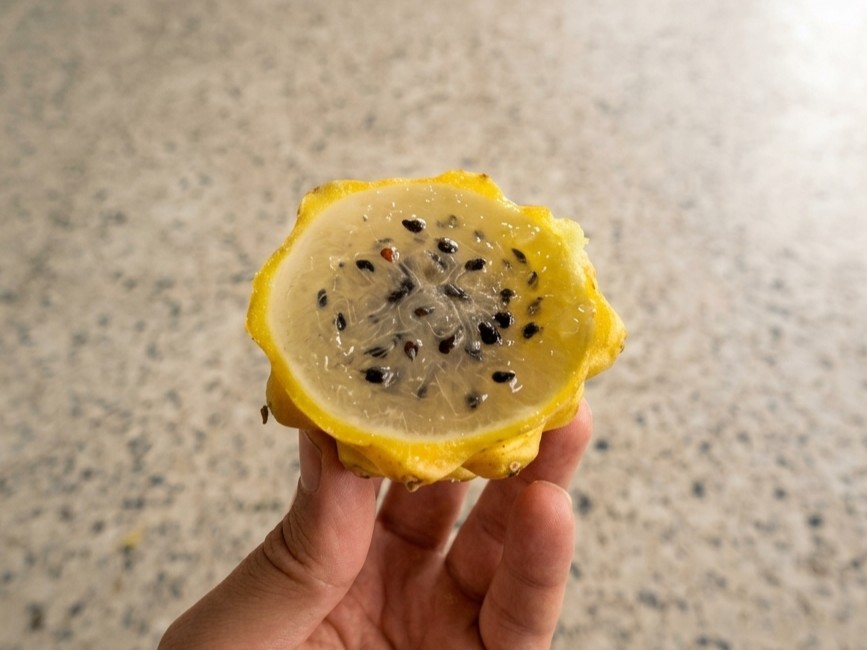
Also known as dragon fruit, pitaya is sometimes spelled pitahaya locally. While red and yellow varieties exist globally, Colombia is particularly famous for its bright yellow variety.
Simply cut the fruit in half and scoop out the white flesh with a spoon. Its soft texture and mild sweetness make it an exceptionally refreshing snack on hot days. Plus, it’s remarkably photogenic; you’ll easily spot its vivid yellow shell while browsing for Colombia tropical fruits in street markets.
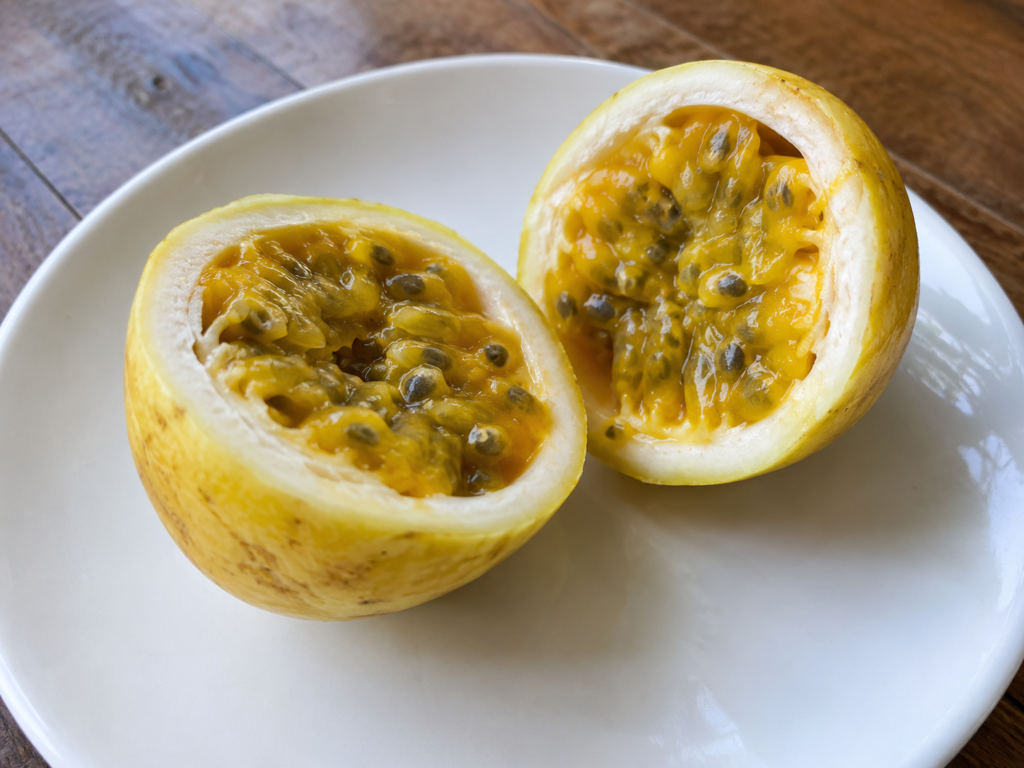
8. Passion Fruit (Maracuyá)
Passion fruit is widely known as maracuyá across Colombia. It offers a signature, aromatic taste profile that balances sweet and tart elements.
The flavor intensity often varies depending on the fruit’s stage of ripeness. You can eat the juicy, seeded pulp straight out of the shell or enjoy it blended into fresh juices and signature drinks.
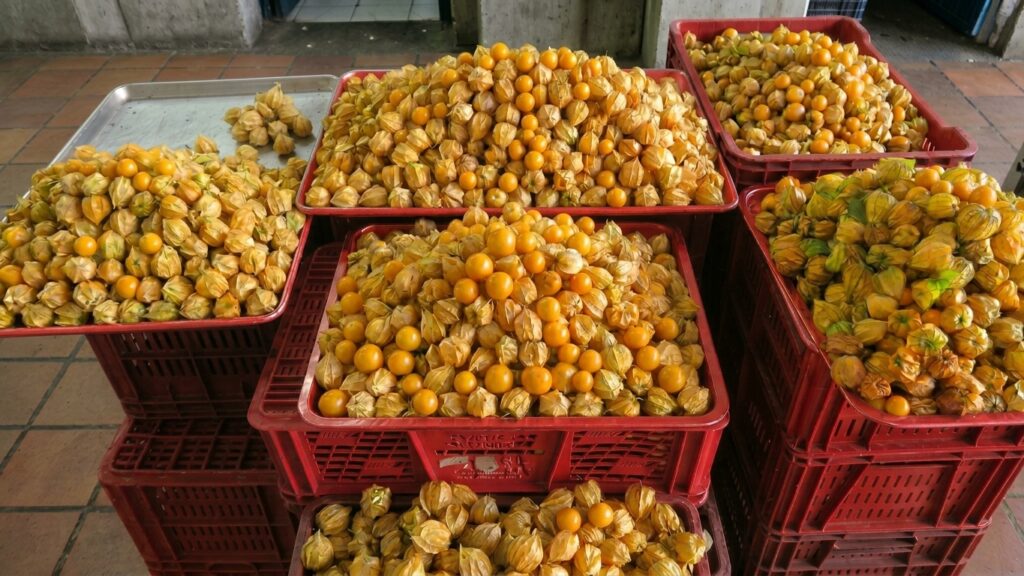
9. Uchuva (Golden Berry)
Enclosed within papery, straw-colored husks, the uchuva looks much like a small orange cherry. However, its taste is entirely distinct; boasting a bold, bright, and pleasantly acidic punch.
You might recognize this fruit under names like Physalis or golden berry in international markets, where it often commands a high price. In Colombia, you can enjoy it fresh, abundantly available, and very affordably. If you like bright, tangy flavors, uchuva is a must-try.
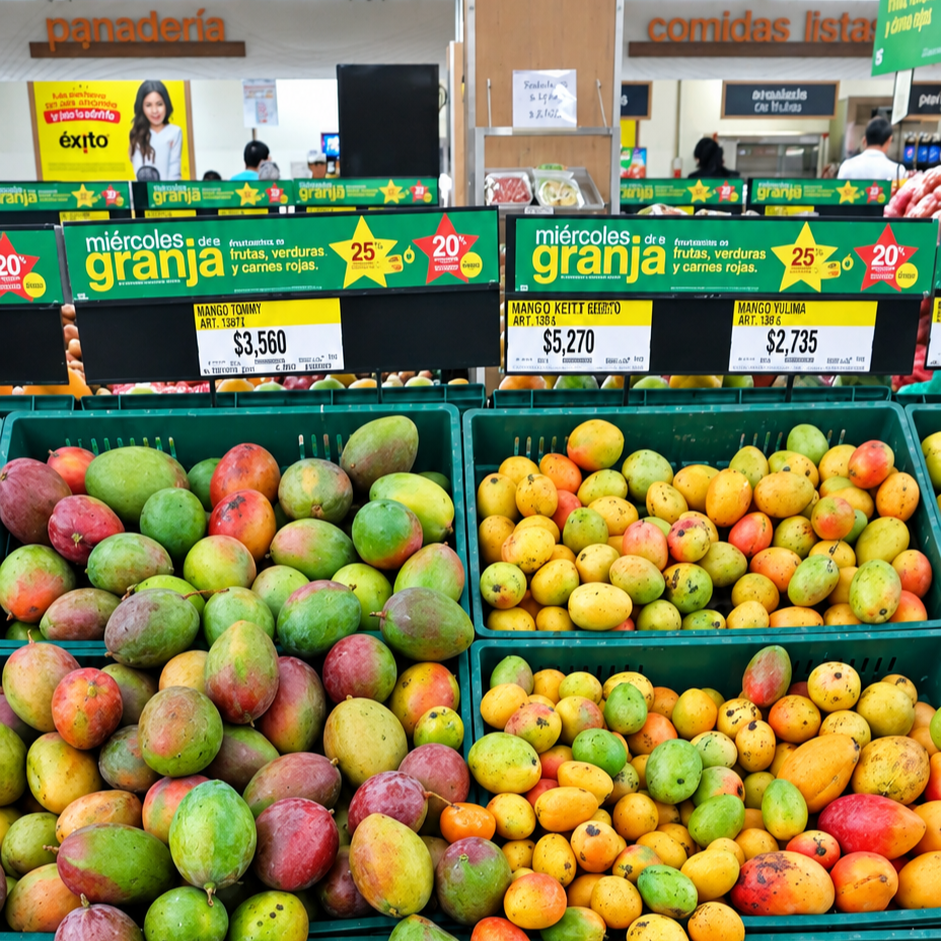
10. Mango
Mango might be one of the most familiar entries on this list, but tasting fresh mangoes in Colombia is a completely elevated experience for tropical fruit lovers.
Throughout the country, mangoes are enjoyed both fresh and blended into smoothies or refreshing beverages. You will see them everywhere, from street food stalls to sit-down restaurant menus. Simply put, exploring Colombia tropical fruits without eating a proper local mango is almost impossible!
Don’t Leave Colombia Without Trying the Tropical Fruits
One of the highlights of my trip was discovering the sheer richness of Colombia tropical fruits. Getting to sample so many varieties I had never seen before was an unforgettable part of the journey.
While a few may look strange at first, tasting new flavors is truly one of the greatest joys of traveling. So if your path leads you to Colombia, don’t limit yourself to familiar staples like mangoes—be sure to step out of your comfort zone and try granadilla, guama, guanábana, lulo, pitaya, and uchuva.
You might fall in love with some and decide others aren’t for you, but every single one of these Colombia tropical fruits is well worth trying at least once!
If you want to discover more Colombian flavors beyond tropical fruits, check out my guide to “What To Eat In Medellin: Food & Places“, where I share some of the best dishes and places to eat in the city.
Colombia Tropical Fruits: 10 Must-Try Exotic Flavors
Thanks to its tropical climate and fertile soil, Colombia tropical fruits offer an exceptionally rich…

Guatapé Guide: Guatapé Day Trip from Medellín
Guatapé – Some trips are like this: you leave early in the morning, spend the…

Salsa in Cali: Discovering the Rhythm of Dance in Colombia’s Salsa Capital
Salsa in Cali — Wherever the name of Cali, located in southwestern Colombia, is mentioned,…