
Laguna de Quilotoa (Quilotoa Lake), Ecuador – After spending a few adrenaline-filled days in Baños, I set my sights on one of Ecuador’s most breathtaking natural wonders: Laguna de Quilotoa. Throughout my journey across Ecuador, nearly every traveler I met told me that I simply had to visit this spectacular crater lake, famous for its mesmerizing turquoise waters.
How to Get to Laguna de Quilotoa?
While I was looking into how to get to Laguna de Quilotoa from the hostel, another traveler staying in my room mentioned that they were planning to visit the lake as well and suggested we go together. I happily agreed, and we immediately started planning our trip. Having a travel companion on long journeys is always an advantage; it makes the journey more enjoyable and helps when dealing with any unexpected challenges along the way.
The next morning, we headed to the Baños Bus Terminal early. There, we learned that there were no direct buses to Quilotoa. Instead, we needed to take a bus to Latacunga first and then transfer to another bus heading to the lake. We boarded a bus to Latacunga for around USD 2 per person. After a journey of about three hours, the driver dropped us off at an intersection near Latacunga where buses to Laguna de Quilotoa pass by. While waiting there, we met a British traveler who was also trying to get to the lake, bringing our little travel group to three.
We asked the taxi drivers waiting at the intersection where we could catch the bus to the lake. They told us the bus stop was about a 10-minute walk away. After thanking them, we set off toward the stop without wasting any time. We arrived after a short walk in the light rain, and the crisp mountain air was already beginning to make itself felt. About twenty minutes later, the bus arrived. We loaded our backpacks into the luggage compartment and finally set off for Laguna de Quilotoa.
The journey from Latacunga to Quilotoa took around three hours, and the bus ticket cost USD 3. As we climbed higher into the foothills of the Andes, we passed through countless winding roads along the way. The bus may have been moving slowly, but it gave us the perfect opportunity to enjoy the breathtaking scenery. Through the window, I watched small village houses, local Indigenous communities, and lush green hills passing by throughout the journey.
Here I Am at Laguna de Quilotoa!
After a scenic journey through the Andes, we finally reached our destination: the breathtaking Laguna de Quilotoa (Quilotoa Lake). As soon as we stepped off the bus, we were greeted by a cool, cloudy, and slightly harsh atmosphere. Quilotoa’s high altitude was immediately noticeable; the chilly air carried by the wind reminded us how different this place was from Ecuador’s tropical regions. Since Laguna de Quilotoa is located within a protected national park, there was an entrance fee. After paying the USD 2 entrance fee per person, we were ready to explore this incredible natural wonder.
While planning our trip to Quilotoa, we wanted to keep our accommodation costs as low as possible in order to stay within our budget. For this reason, we completely ignored the online reviews and ratings and focused only on the price, booking a hostel called Hostal Pachamama. However, we realized we had made a big mistake the moment we stepped inside.
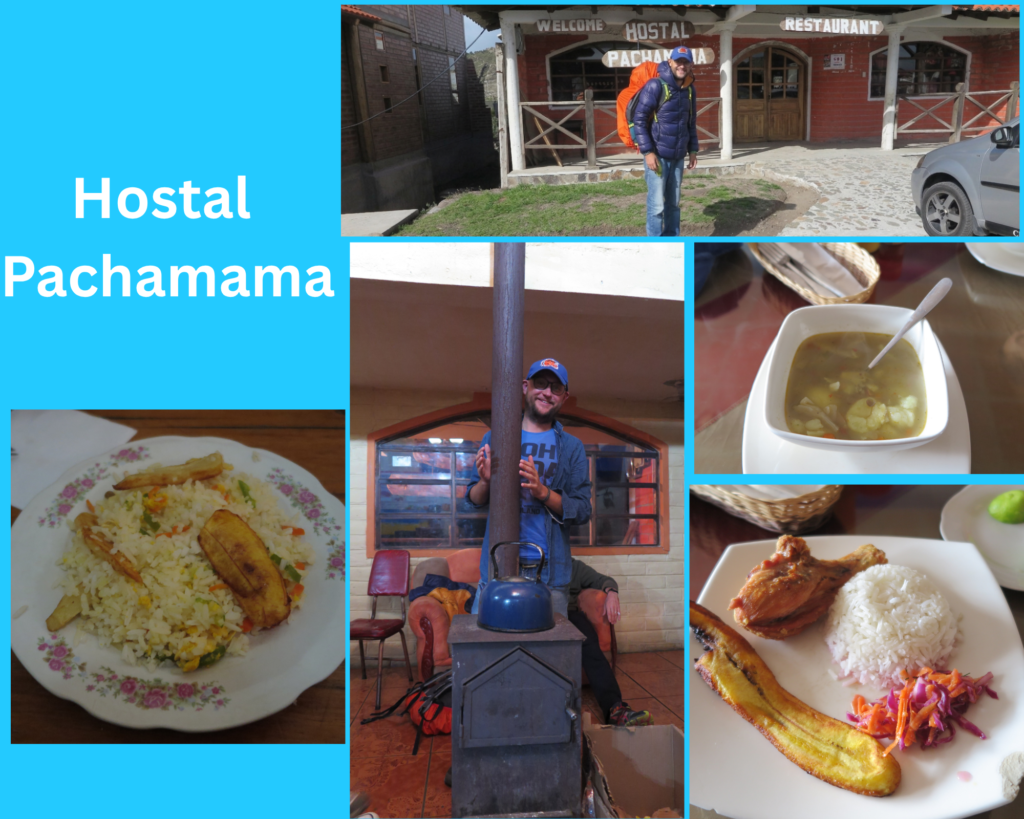
It was a small family-run hostel, but unfortunately, it had several serious shortcomings, from cleanliness to comfort. The rooms were quite dirty, freezing cold, and far from comfortable. Luckily, my plan was to stay there for only one night and continue my journey alone the next day after leaving the group, so I didn’t worry too much about the situation. Since the other members of the group also didn’t make a big issue out of it, we decided to embrace it as part of the adventure and spend the night there.
Let’s Discover Laguna de Quilotoa!
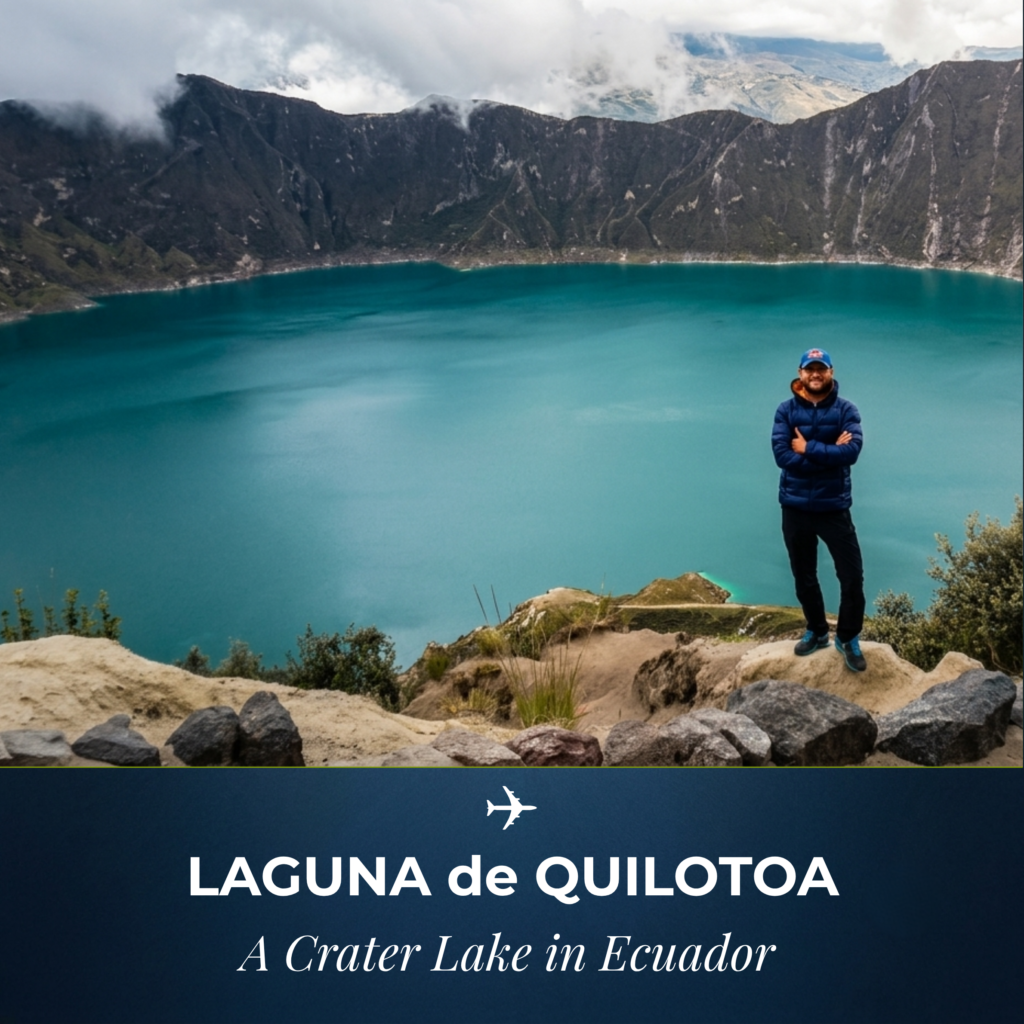
After leaving my belongings in the room, I headed outside without wasting any time to see the lake, famous for its turquoise waters, up close. Before making my way down to Laguna de Quilotoa, I first went to the viewpoint where I could admire the lake from above. It was located right near the trail leading down to the lake.
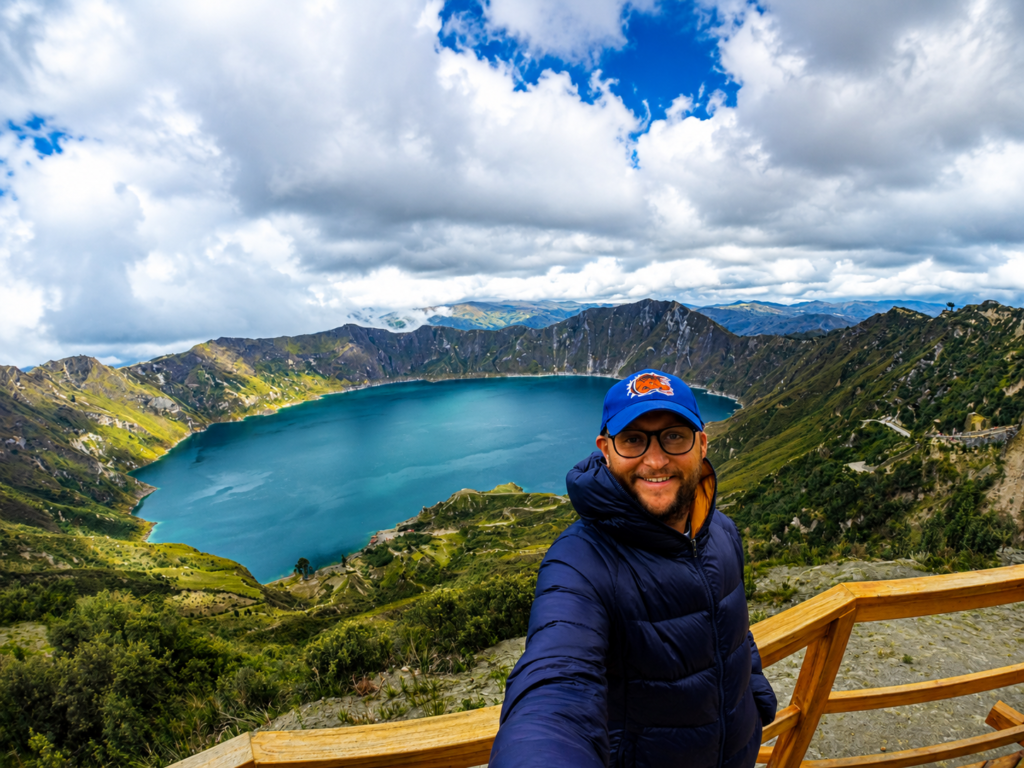
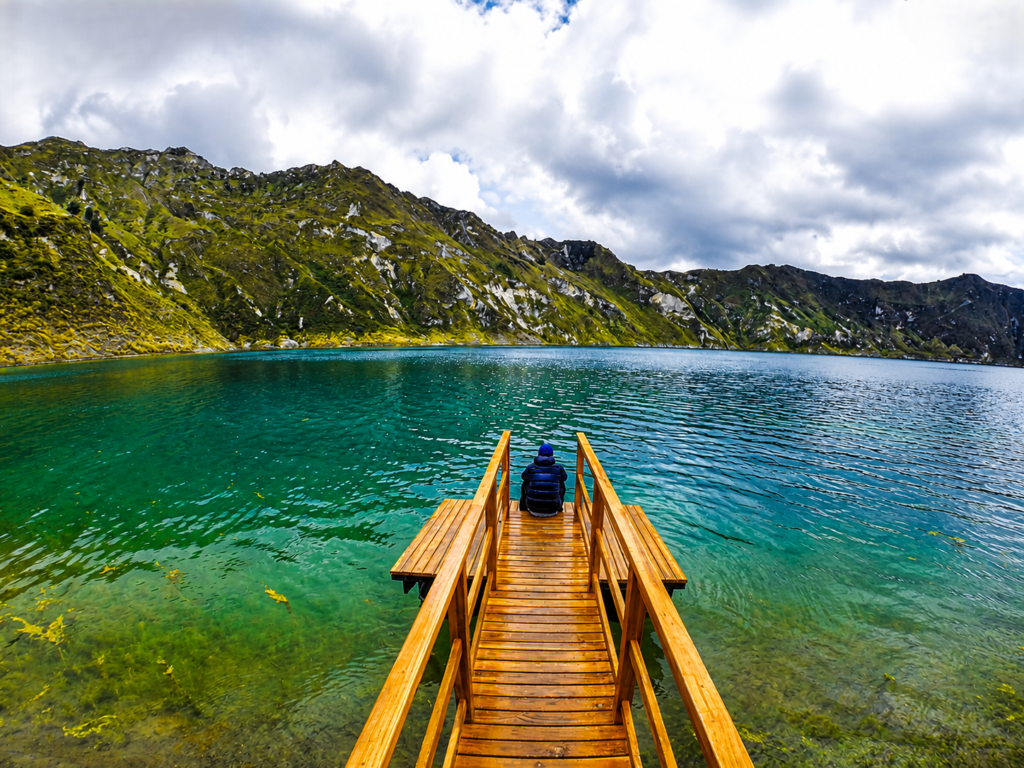
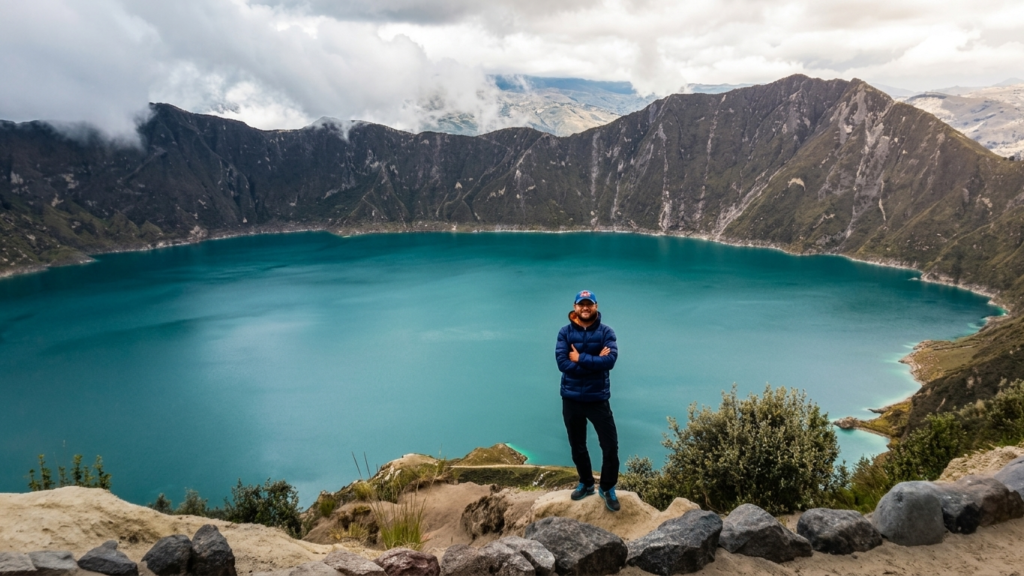
Honestly, looking at a crater lake from this perspective was an incredible experience. In front of me was a breathtaking lake with blue-green hues, formed inside a massive volcanic crater and looking almost unreal. The clouds would occasionally descend over the lake and then disappear again, constantly transforming the scenery into a completely different view.
So, keep this in mind: before starting your hike down to Laguna de Quilotoa, make sure to walk to the edge of the crater and take a moment to admire the lake from above. It is one of the most spectacular ways to meet this incredible natural wonder for the first time.
Laguna de Quilotoa is a natural crater lake formed approximately 800 years ago after a massive eruption of the Quilotoa Volcano. Located at an altitude of around 3,900 meters above sea level, the lake gets its striking turquoise and blue-green colors from volcanic minerals and is considered one of Ecuador’s most impressive natural wonders.
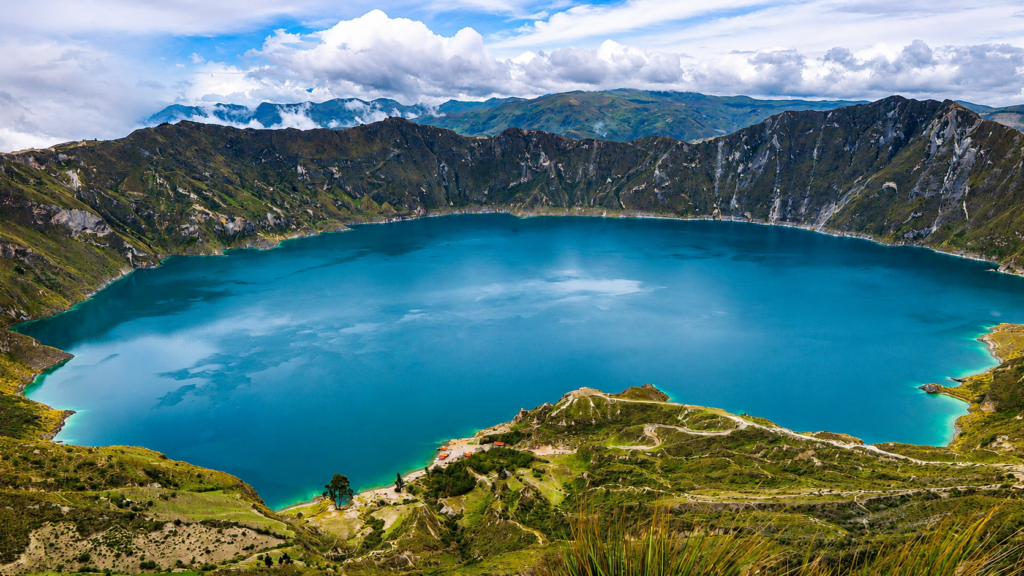
The hike from the crater rim down to the lakeshore may look a little challenging at first. However, the descent itself is an enjoyable experience, with constantly changing views along the way. Thanks to the steep slope, I reached the lake level in about half an hour, slowly taking in the breathtaking scenery. With every step, I could feel the magical atmosphere of Quilotoa even more.
When I reached the shore, the first thing I did was rent a small kayak and set out to explore the lake. Paddling through the calm waters, surrounded by towering crater walls, a bright blue sky, and almost complete silence, was one of those moments I will never forget. Moving across these peaceful waters in the heart of a volcano that was formed thousands of years ago was more than just an activity; it was one of the best ways to truly feel the spirit of Quilotoa.
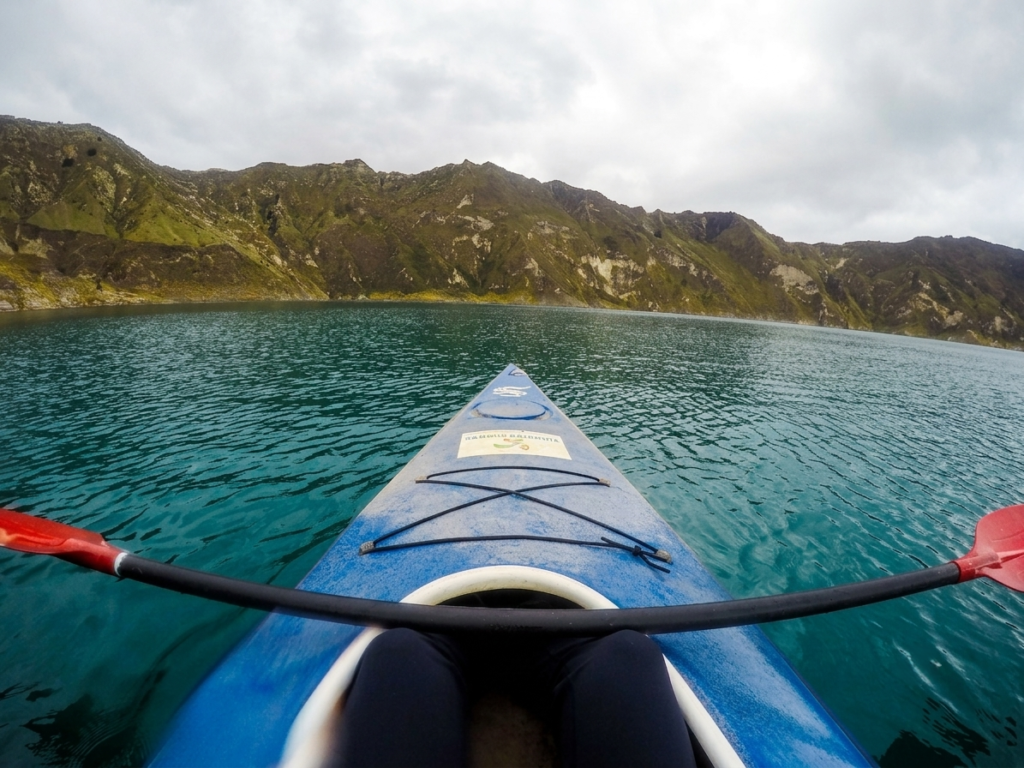
After my kayak ride, I found a quiet spot by the lakeshore and sat down for a while. I spent some time simply admiring the lake and etching the breathtaking beauty of this natural masterpiece into my memory. After fully enjoying the peaceful feeling of being on the road and discovering new places, I started my journey back.
Now, I had to climb back up the same slope that I had easily descended earlier. The hike back to the top took me around an hour. I’m not sure how much the high altitude contributed to how exhausting the climb felt. The only thing I knew was that the way back up was nowhere near as enjoyable as the descent.
One Last Look at the Lake
I spent the evening at the hostel, surrounded by the deep silence that dominates the heart of the Andes. Far away from the noise of the cities, with only the sound of the wind and nature accompanying me, this peaceful night became one of the most special moments of my Laguna de Quilotoa experience.
After spending one night there, I woke up early the next morning. Before leaving, I stepped outside to take one last look at this incredible landscape. The turquoise waters occasionally revealing themselves between the clouds looked even more breathtaking than they had the day before.
After breakfast, I packed my belongings, boarded the bus, and continued my journey toward my next destination in Ecuador. For me, Laguna de Quilotoa was much more than just a beautiful viewpoint; it was a unique experience where I could feel both the power and the silence of nature high in the Andes.
This extraordinary crater lake became one of those places throughout my Ecuador journey that I didn’t just see but truly felt: a place that will remain forever in my memory.
Tip: You can find the latest information about Lake Quilotoa on the website https://www.quilotoa.com/.
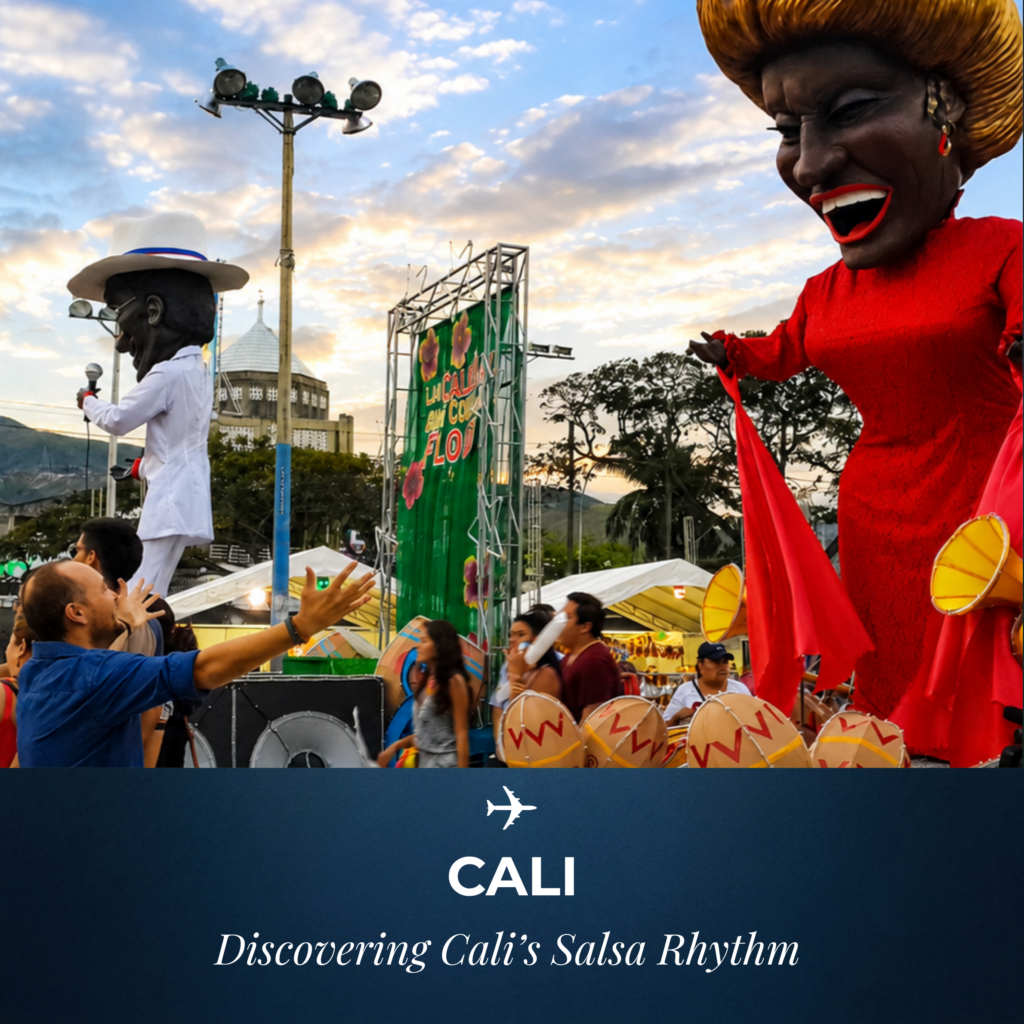
Salsa in Cali: Discovering the Rhythm of Dance in Colombia’s Salsa Capital
Salsa in Cali — Wherever the name of Cali, located in southwestern Colombia, is mentioned,…
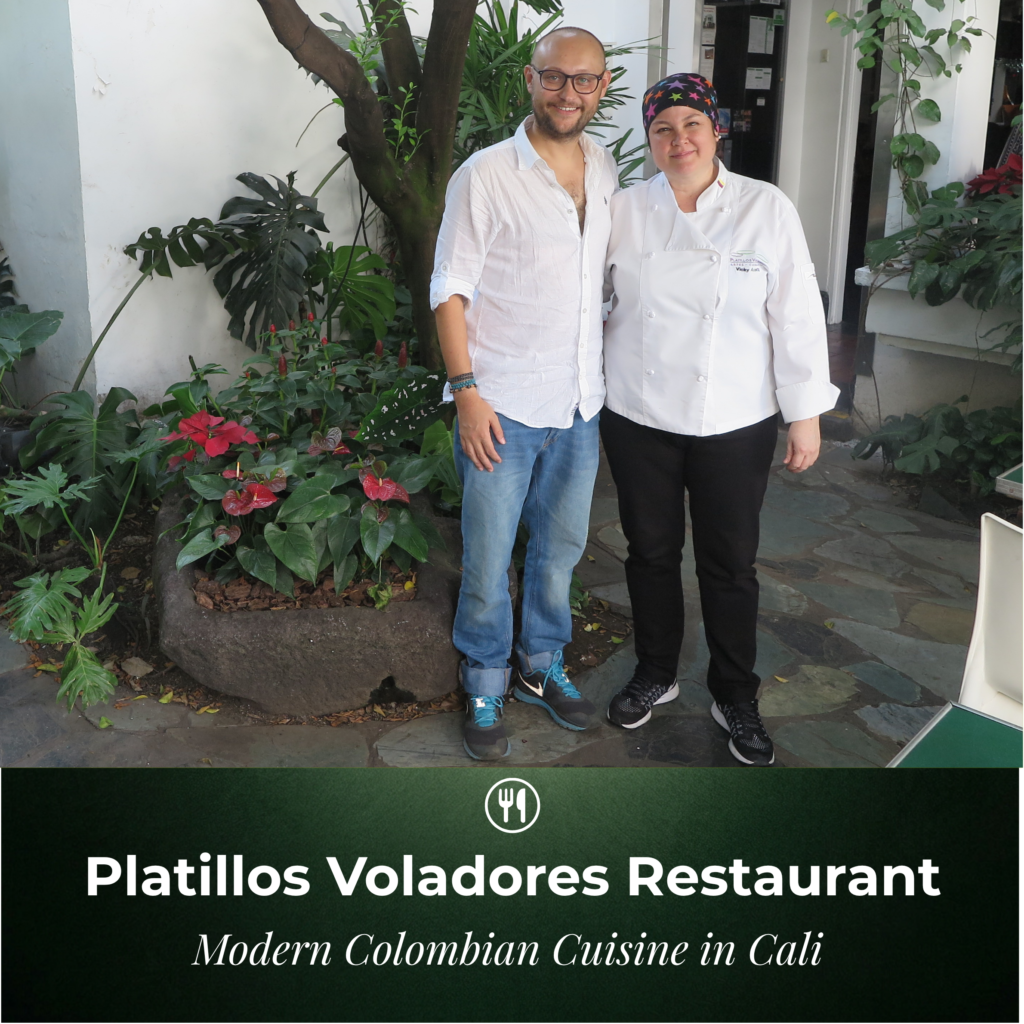
Platillos Voladores Restaurant, Cali: A Modern Take on Colombian Cuisine
Platillos Voladores Restaurant, Cali – When people think of Cali, Colombia, salsa dancing is usually…
Laguna de Quilotoa, Ecuador: The Lake Above the Sky
Laguna de Quilotoa (Quilotoa Lake), Ecuador – After spending a few adrenaline-filled days in Baños,…